Tribulus Terrestris
One of the most common ingredients in men's supplements, and one of the most consistently disappointing in controlled trials.
Why Tribulus Is in Jelly Fill
A staple of men's supplements that has repeatedly failed to raise testosterone in controlled human trials. It is one of the nine components of the Jelly Fill proprietary blend, and this page covers what it is, the research context, its role here and the cautions attached to it.
The Jelly Fill blend is 82 mg in total — and that number matters
The label lists a single proprietary blend of 82 mg covering all nine components, noted as equivalent to roughly 567 mg of dry powders. No individual amount is published except caffeine at 5 mg.
That total is worth putting in context. Ashwagandha trials typically use 300–600 mg of extract daily. Maca studies commonly use 1.5–3 grams. L-arginine research generally uses several grams. Tribulus trials often exceed 750 mg. The entire blend here is 82 mg spread across nine ingredients.
This is not a criticism of any single ingredient — it is the arithmetic the label itself provides. It is also why no milligram figures for individual ingredients appear anywhere on this website: they are not published, and inventing them would be worse than leaving them out.
What Tribulus Terrestris in Jelly Fill Is
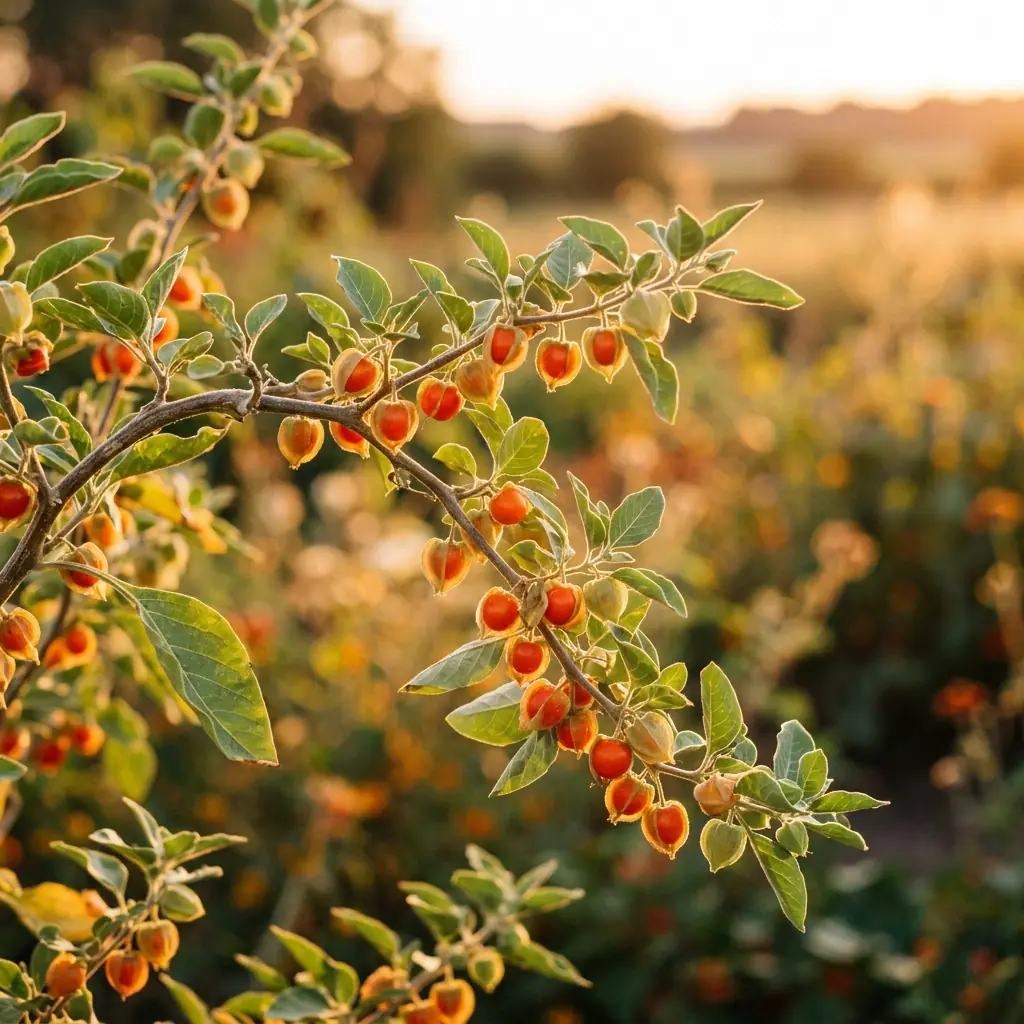
Tribulus terrestris is a low-growing plant found across warm regions worldwide, known in various places as puncture vine or goat's head after its spiked seed pods.
It has been used in Ayurvedic and traditional Chinese preparations, and became a fixture of Western sports supplements in the 1990s after claims about its use by Eastern European athletes circulated widely.
Its compounds of interest are steroidal saponins, principally protodioscin. Extracts are sometimes standardised to a saponin percentage; the Jelly Fill label does not publish one.
The Research Context Behind Tribulus in Jelly Fill
This section has to be blunt, because the gap between this ingredient's popularity and its evidence is the widest in the formula.
Tribulus does not reliably raise testosterone in humans. This has been tested repeatedly. Randomised controlled trials in trained and untrained men, in young and older participants, have consistently found no significant difference from placebo in testosterone levels. A systematic review examining tribulus and testosterone concluded the evidence did not support the claim.
The testosterone reputation appears to originate in animal research, where effects have been observed in some species, and in early marketing that outran the human data.
Where the evidence is slightly more interesting is sexual function. Some trials, particularly in men with reduced libido or erectile difficulty, have reported improvements in questionnaire scores — apparently without changing testosterone, which suggests a different mechanism if the effect is real. These studies are smaller and less consistent.
Trial doses were commonly 750 mg or more daily. The Jelly Fill blend totals 82 mg across nine ingredients.
Why Tribulus Is Included in Jelly Fill
Recognition, principally. Tribulus is one of the most familiar names in men's supplements and buyers expect to see it, which keeps it in formulas long after the evidence stopped supporting the claims attached to it.
It is one of the three ingredients appearing on both the sales page's list and the product label, so at least its presence is not in dispute.
We would rather say plainly that the testosterone claim does not hold up than construct a rationale the trials have repeatedly failed to support.
Responsible Expectations and Safety for Tribulus in Jelly Fill
Do not expect a hormonal effect, because controlled trials have not found one. If you suspect low testosterone, a blood test through your doctor will tell you far more than any supplement.
Safety notes. Tribulus is generally well tolerated at typical supplement amounts, with digestive upset the most common complaint.
There are, however, published case reports linking tribulus-containing products to liver injury and, in a small number of cases, kidney problems. Reports are rare and generally involve higher doses or multi-ingredient products where attribution is uncertain — but anyone with liver or kidney disease should avoid it without medical advice.
It may also affect blood sugar and blood pressure, so mention it to your doctor if you take medication for either. It is not appropriate for anyone with a hormone-sensitive condition without medical advice.
How to read the research on this Jelly Fill page
The studies described here examined individual ingredients, usually on their own, at doses set by the researchers — doses that are generally far higher than an 82 mg blend can deliver.
That research provides context for why an ingredient appears in a formula. It does not demonstrate that the finished Jelly Fill product produces the same outcomes. No clinical trial of this finished formula has been published.
Jelly Fill and medication: one interaction genuinely matters
L-arginine and horny goat weed both act on blood vessels. L-arginine is converted to nitric oxide, which widens them; horny goat weed contains icariin, a mild inhibitor of the same enzyme targeted by prescription erectile dysfunction drugs.
That means you should not combine this product with nitrates (such as nitroglycerin for angina), blood pressure medication, or ED medication such as sildenafil or tadalafil without speaking to your doctor. The combination can lower blood pressure further than intended.
- Ashwagandha has case reports of liver injury, can affect thyroid hormone levels, and interacts with sedatives, immunosuppressants and thyroid medication.
- Green tea extract and tribulus both have case reports linking high doses to liver problems.
- Green tea extract can also reduce iron absorption and interacts with anticoagulants.
- The gummies contain 3 g of added sugar each, which is worth knowing if you are managing blood glucose.
The product label's own warning is to consult your doctor before use if you are taking medications or have a medical condition, and to discontinue use if any adverse reaction occurs. That is worth following rather than skimming.
When low energy or low libido needs a doctor, not a supplement
This is the most useful thing on this website, so it appears on every substantive page.
Persistent fatigue, reduced libido or difficulty with erections are frequently early signals of something treatable and sometimes serious: cardiovascular disease, type 2 diabetes, low testosterone, thyroid problems, sleep apnoea, depression, or a side effect of medication you are already taking.
Erectile difficulty in particular is a recognised early marker of cardiovascular disease, often appearing years before other symptoms. Treating it with a gummy rather than getting it assessed can mean missing a warning worth acting on.
If any of this has been going on for more than a few weeks, book an appointment. A GP can check blood pressure, blood glucose, cholesterol and hormone levels in a single visit, and none of that is embarrassing to ask about.
Related Jelly Fill Reading
The main ingredients page sets out how all nine components sit together, and how Jelly Fill works explains the daily routine and the amounts involved.
More Jelly Fill Ingredients
Muira Puama Extract
An Amazonian shrub bark with a long history of traditional use and, honestly, very little modern human research behind it.
Peruvian root vegetableMaca Extract
A high-altitude Peruvian root eaten as a food crop, with the most encouraging human research of any botanical in this blend.
Brazilian barkCatuaba Extract
A Brazilian tree bark used in traditional preparations, with essentially no controlled human trials to draw on.
Catechins and antioxidantsGreen Tea Extract
A well-researched leaf extract supplying catechins — and part of the reason the "no stimulants" claim does not hold up.
Make Jelly Fill Part of Your Daily Routine
One gummy a day, alongside the sleep, movement and balanced eating that do the real work in everyday energy. Thirty gummies to a bottle, a straightforward routine, and a 60-day money-back guarantee on every order.
From $49 per bottle · Free shipping on 3 and 6 bottles · 60-day guarantee